The cherry side table beside a linen sofa in a pale room

Petal Side Table

One angle sets every cut.

Leaning legs usually mean many angles and many jigs.

One angle sets every cut. Every joint stays hidden.

13.5°

One angle, five cuts.

  1. Foot
  2. Top of the leg
  3. Mortise for the top
  4. Mortise for the brace
  5. End of the brace
13.5° 12345

Window, foot, edge.

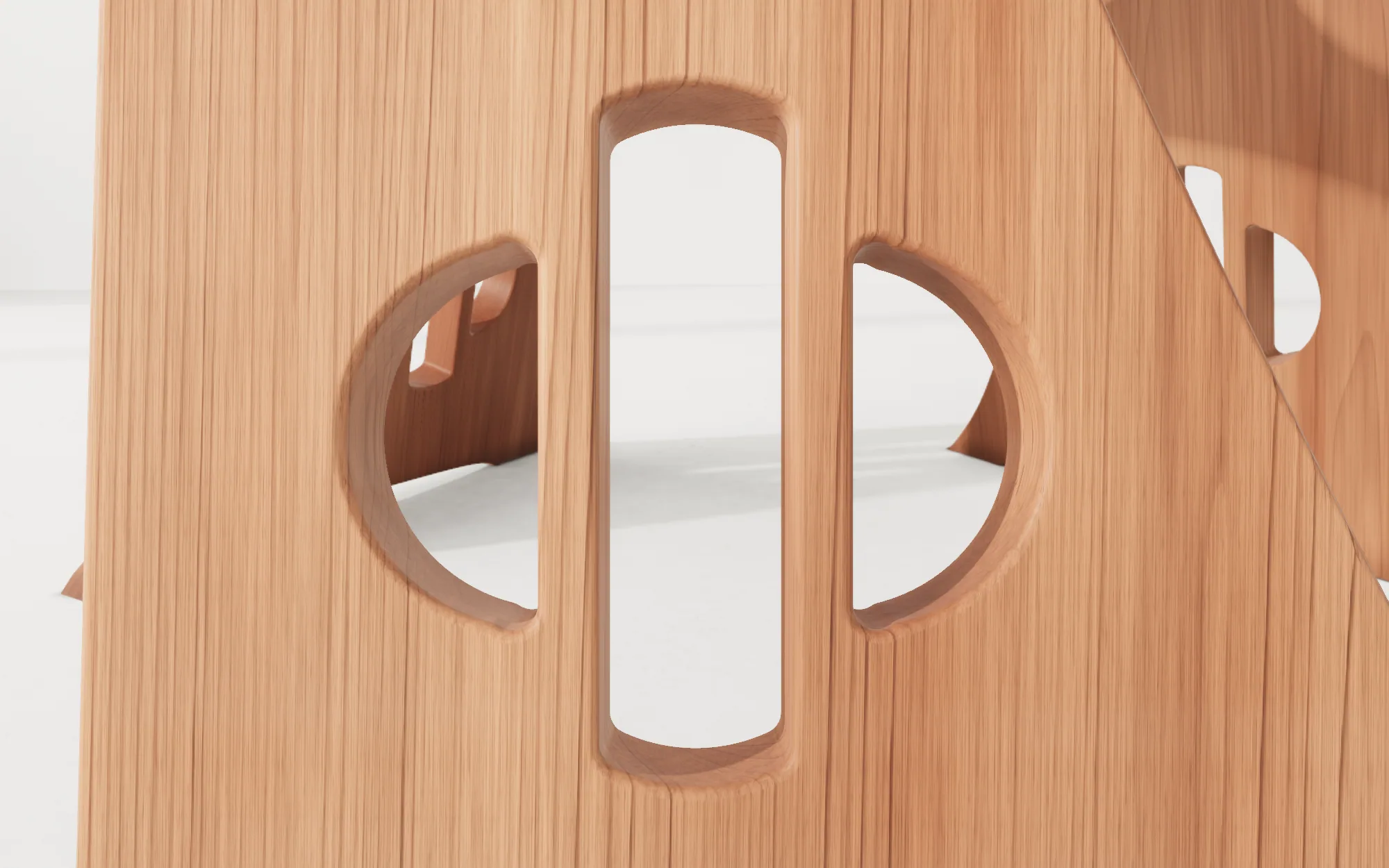
The begonia window sawn through a leg: a slot between two half rounds, sun on the cut faces
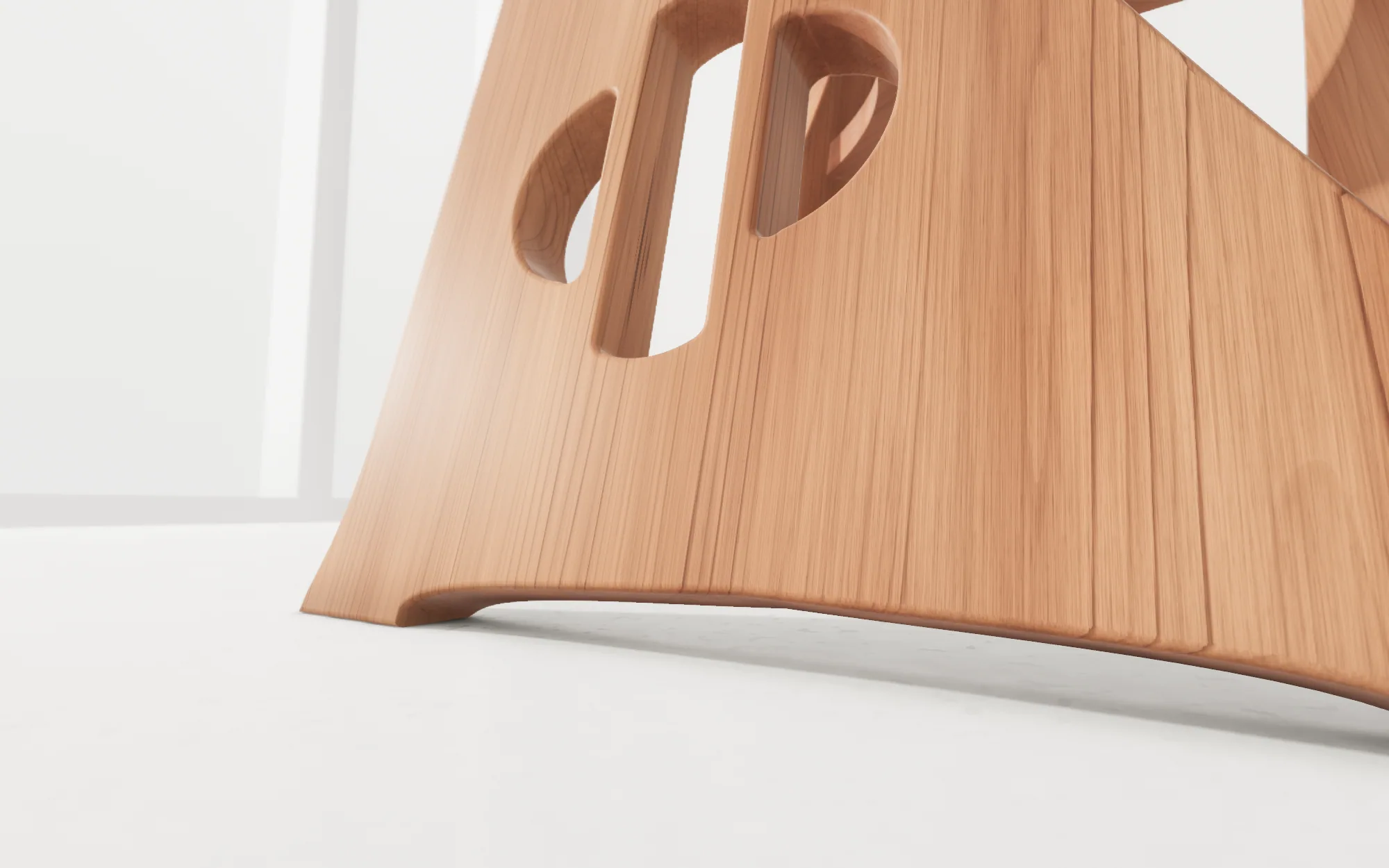
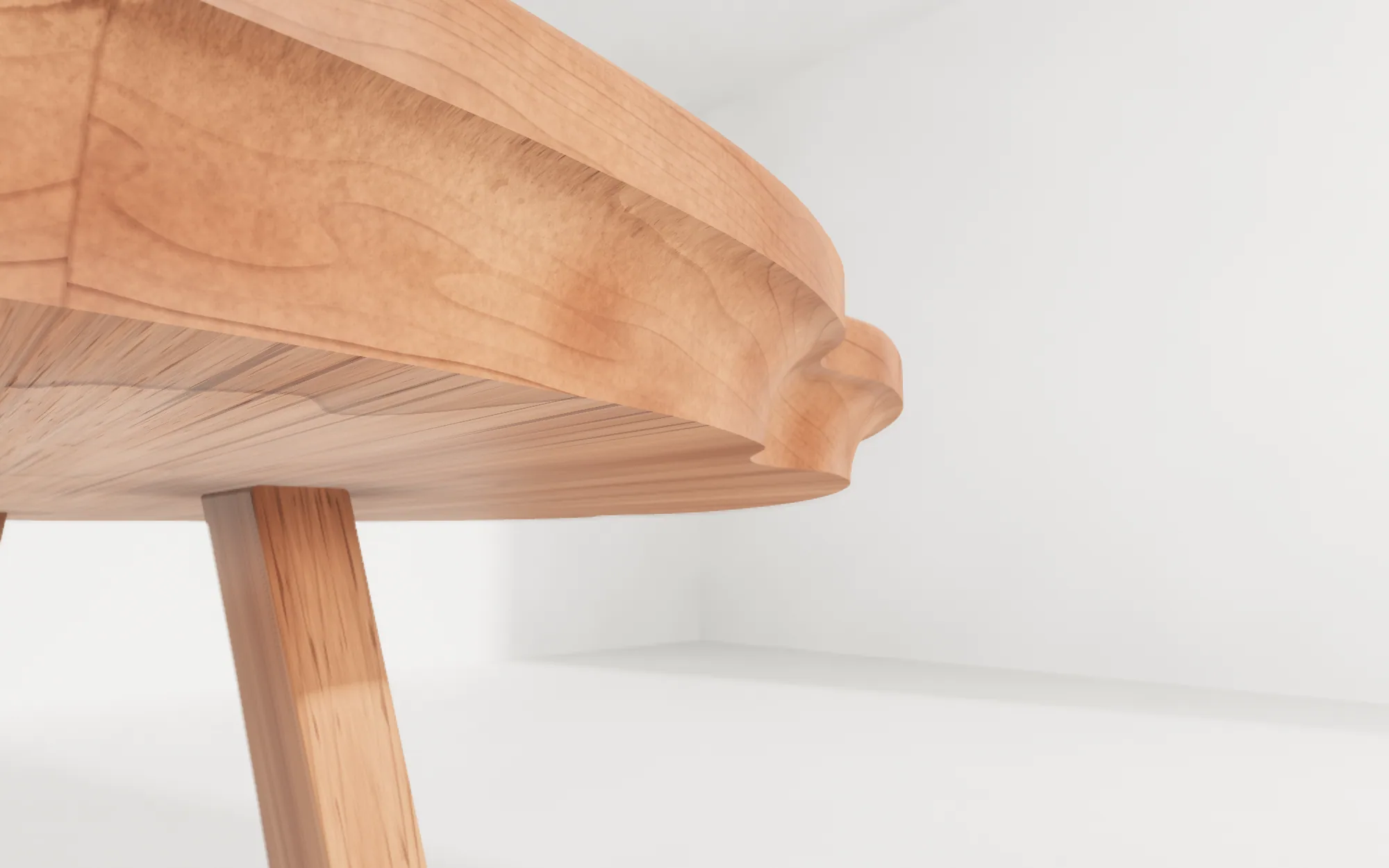
A flared hoof foot from floor level, a shallow arch between its two points
The scalloped edge of the top in low sun, a stoneware cup on the cherry

Through the window

Seven hidden tenons

Seven panels, seven loose tenons. All joints blind.

14 parts

  1. Whole table, 20 inches high
  2. Hoof foot from floor level, 3/8 inch arch
  3. Begonia window from the front, middle hole about 0.96 inches wide
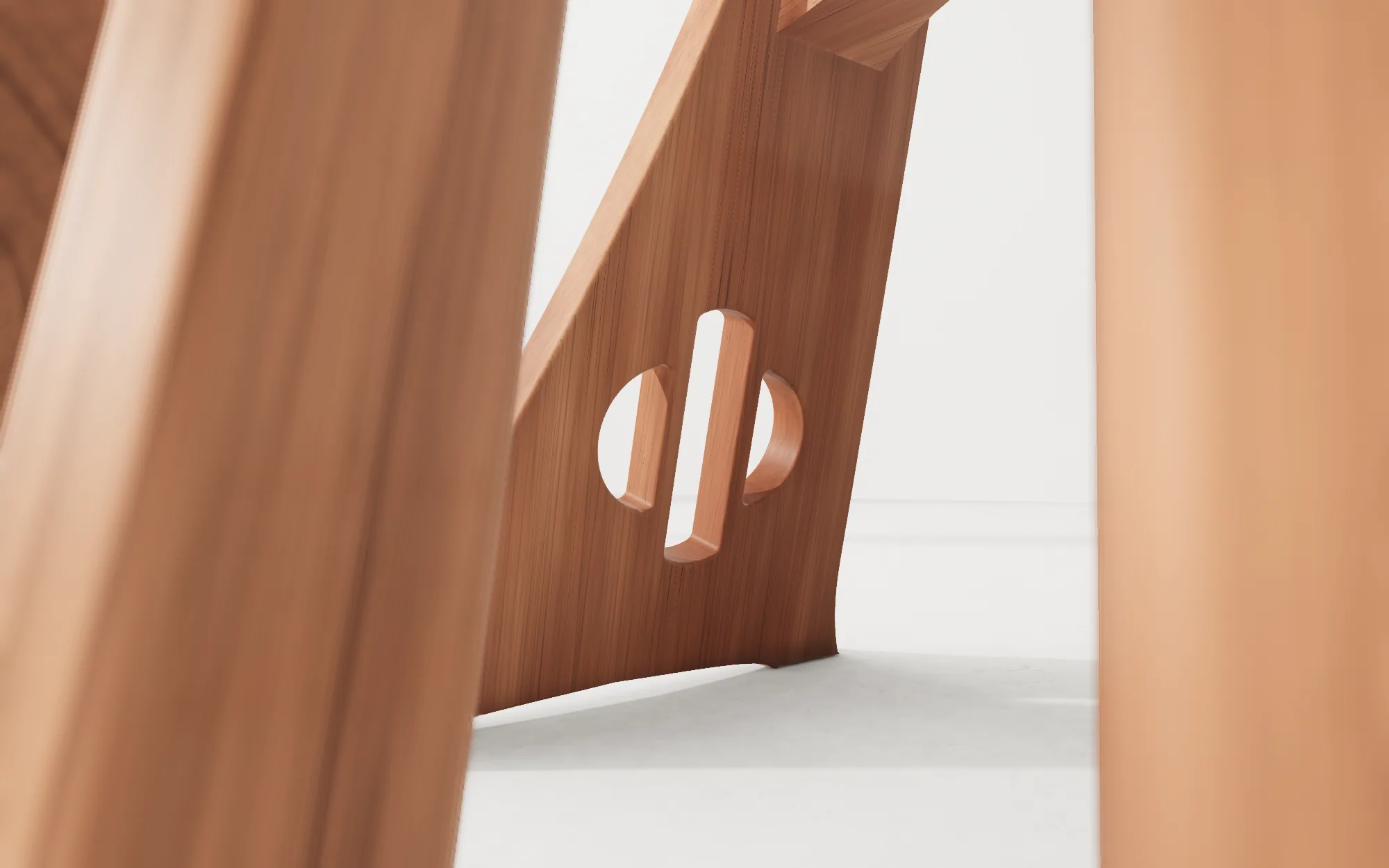
  4. Through the middle hole, the far window in focus
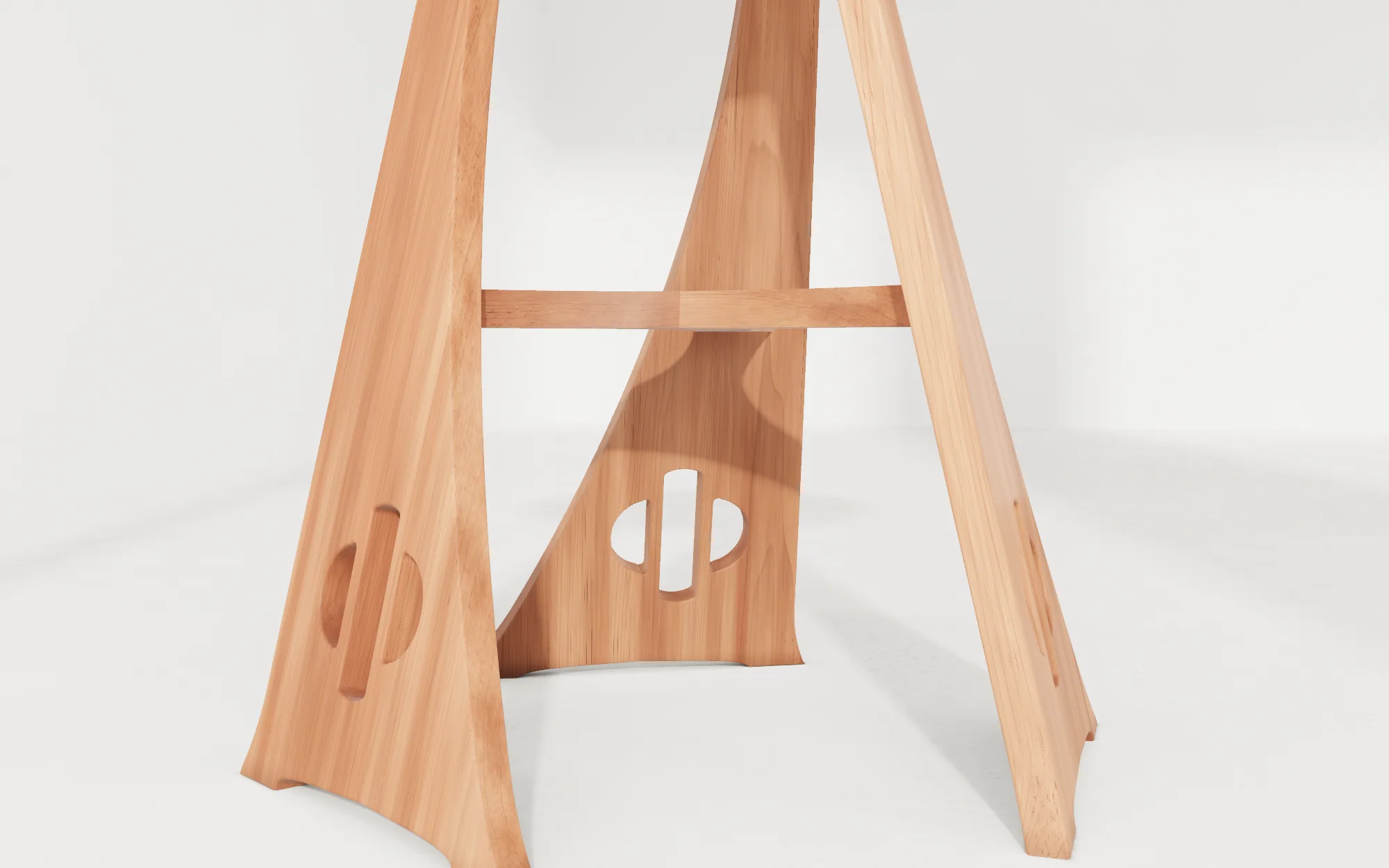
  5. The three-arm brace seen level, 9 inches above the floor
  6. Ice-plate edge of the top, 0.89 inches thick
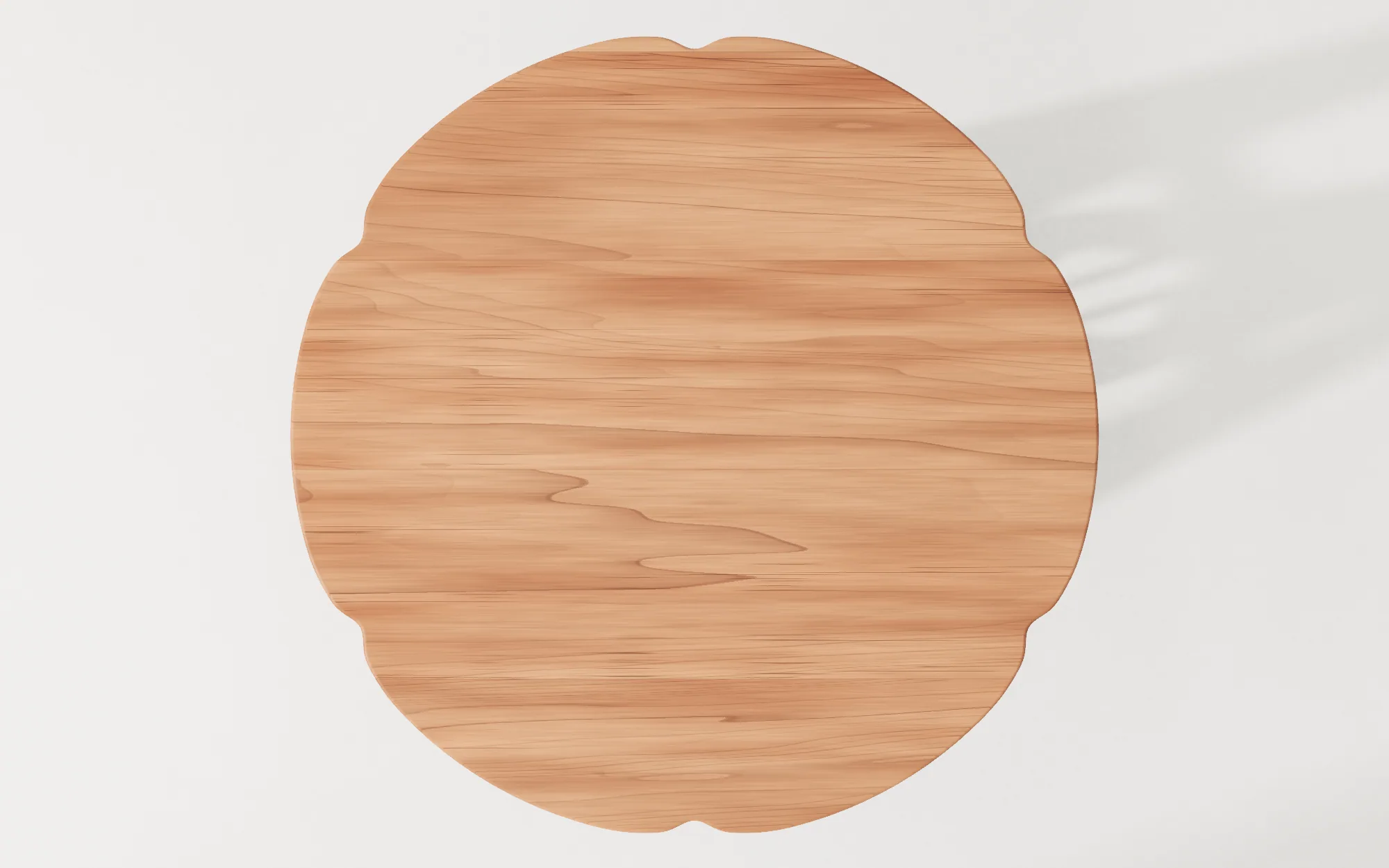
  7. Plan view of the six-petal top, 18 inches across
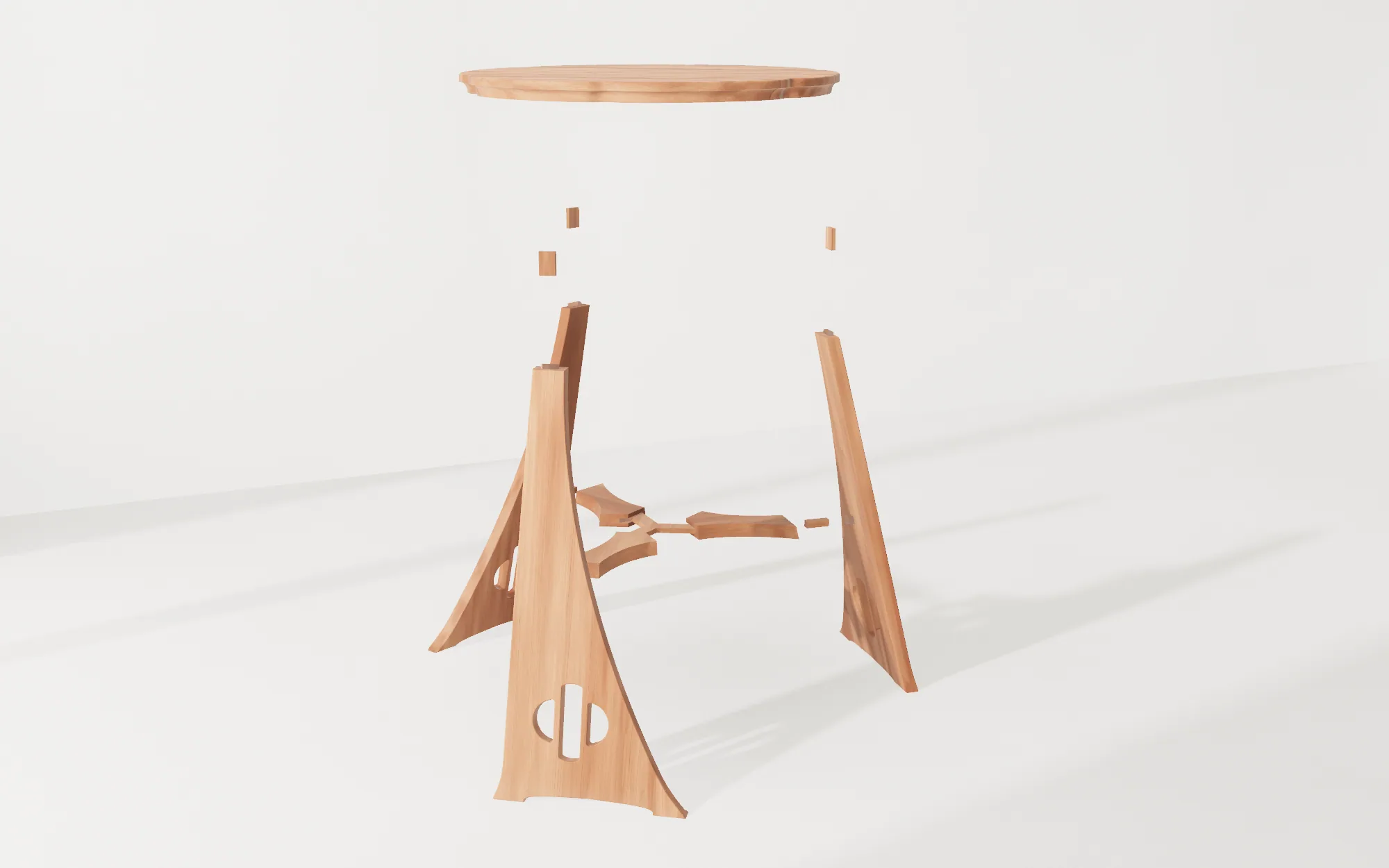
  8. Exploded view of all 14 parts

Through the window
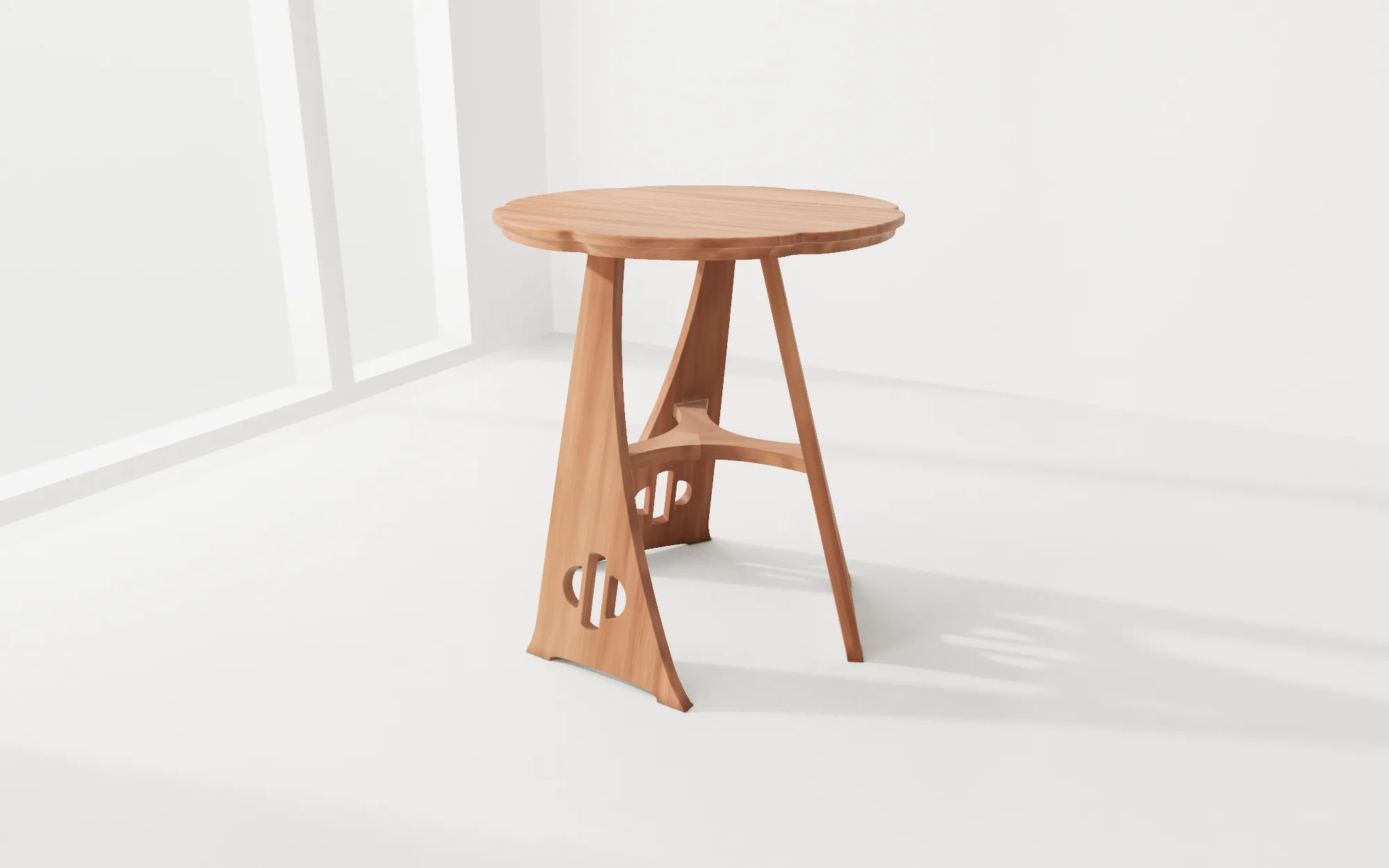
  1. Whole table, 20 inches high
    20″ high
  2. Hoof foot from floor level, 3/8 inch arch
    3/8″ arch
  3. Begonia window from the front, middle hole about 0.96 inches wide
  4. Through the middle hole, the far window in focus
  5. The three-arm brace seen level, 9 inches above the floor
    Brace at 9″
  6. Ice-plate edge of the top, 0.89 inches thick
    0.89″ top
  7. Plan view of the six-petal top, 18 inches across
    18″ across
  8. Exploded view of all 14 parts
    14 parts

Seven hidden tenons

Seven panels, seven loose tenons. All joints blind.

The table as pale glass, the seven hidden tenons solid inside it

14 parts

The table in a pale room with a white vase of ranunculus on its top

No joint in sight.

Three kinds of tenon.

Each is a loose piece in a blind mortise.

The brace pulled apart: three arms, the Y tenon that joins them at the hub, and a small loose tenon at each outer end, one facing its mortise in a leg
3Leg to top
≈0.75 × 1.07 × 0.22″
3Brace to leg
≈1.23 × 0.38 × 0.36″
1Y at the hub
≈0.27″ thick

Sizes from the CAD model.

The load, made visible.

A ram presses on the middle of the top. Colour marks where the cherry is working, as a photoelastic coating would show it. The load runs down the straight edge of each leg and gathers at the brace and beside the windows.

Simulated on the CAD model as one even material standing on a smooth floor. It shows where stress gathers, not a rated load.

A hand sets a cup of tea on the cherry table beside the arm of a linen sofa; an open book and a pair of glasses lie on the six-petal top

A cup within reach.

A hand sets a mug on the table beside a pale wooden chair
The table from floor level: three leaning legs, each with its begonia window, under the scalloped top
The table beside a low bed in morning light, with a lamp and two books

Process

  1. Pencil drafts of side tables laid out on a floor, most of them headed Post Beam, Post Slab or Post Rung
  2. Four of the drafts close up: two slab tops on crossed legs, a round top on three panel legs, a woven top on posts
  3. Full-size drawing of the table pinned to a wall
  4. Cherry boards stacked in the racks of a lumber yard
  5. Cardboard outlines of a leg and the brace arms laid on a cardboard top
  6. Glue run in loops across a cherry panel
  7. The top panel held flat under a ring of clamps
  8. A leg blank on the bandsaw table, cut to its outline
  9. A rasp held against the edge of the top
  10. The top, three brace arms and three legs laid out on a bench
  11. Three legs and the brace standing on a bench without glue
  12. The assembled table in raw cherry on a workshop bench
  13. Looking through one leg window at a second leg window, in focus
  14. A cherry leg clamped on the wedge jig under the drill press
  15. A leg on the scroll saw with the window half cut
The small table alone by a pale wall in early light

Fourteen parts. One angle.American cherry

Avian Habitat

Next project, 5 of 5