

Petal Side Table
One angle sets every cut.
Leaning legs usually mean many angles and many jigs.
One angle sets every cut. Every joint stays hidden.
13.5°
One angle, five cuts.
- Foot
- Top of the leg
- Mortise for the top
- Mortise for the brace
- End of the brace
Window, foot, edge.


Through the window
Seven hidden tenons
Seven panels, seven loose tenons. All joints blind.
14 parts
- Whole table, 20 inches high
- Hoof foot from floor level, 3/8 inch arch
- Begonia window from the front, middle hole about 0.96 inches wide
- Through the middle hole, the far window in focus
- The three-arm brace seen level, 9 inches above the floor
- Ice-plate edge of the top, 0.89 inches thick
- Plan view of the six-petal top, 18 inches across
- Exploded view of all 14 parts
Through the window
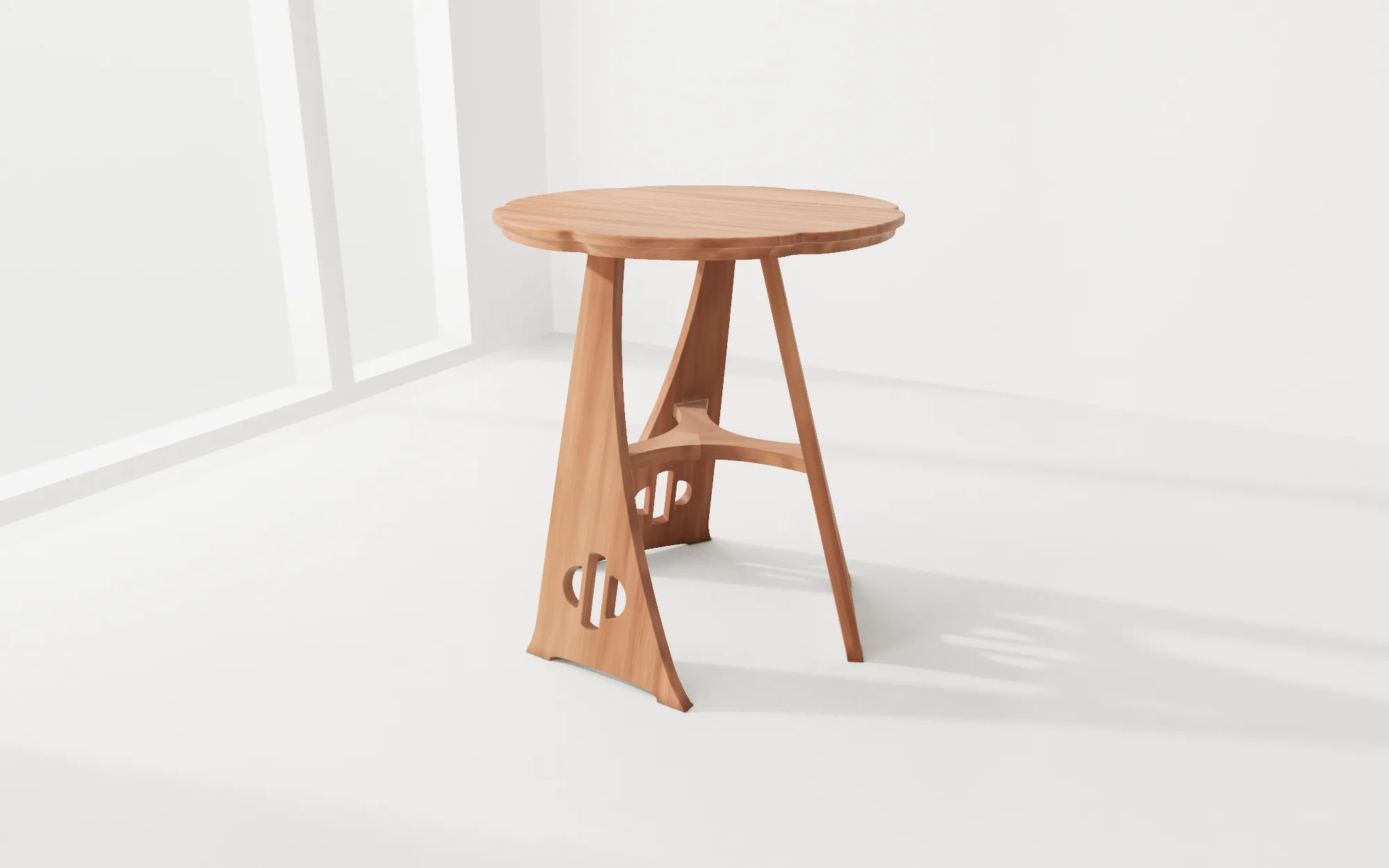
20″ high 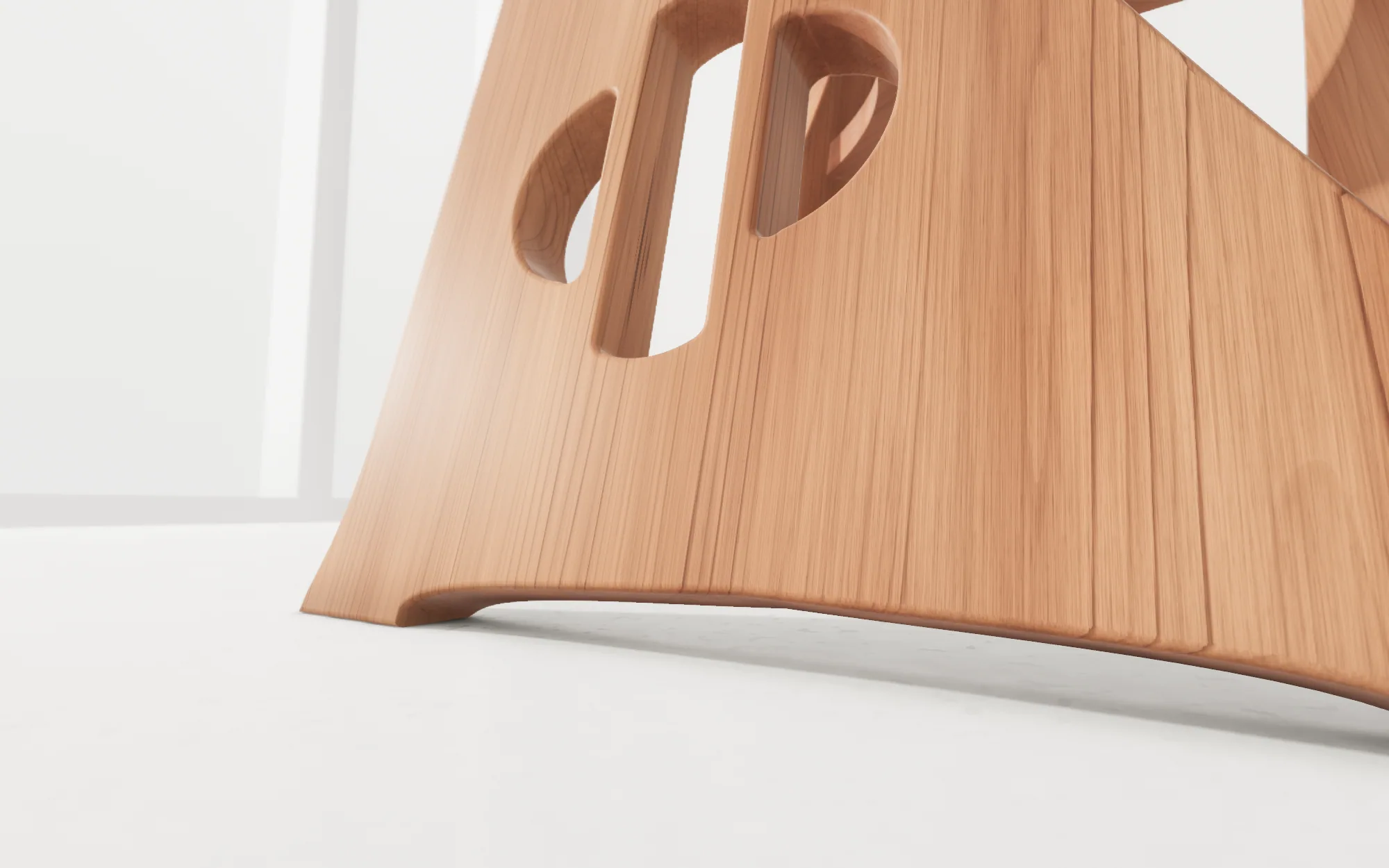
3/8″ arch 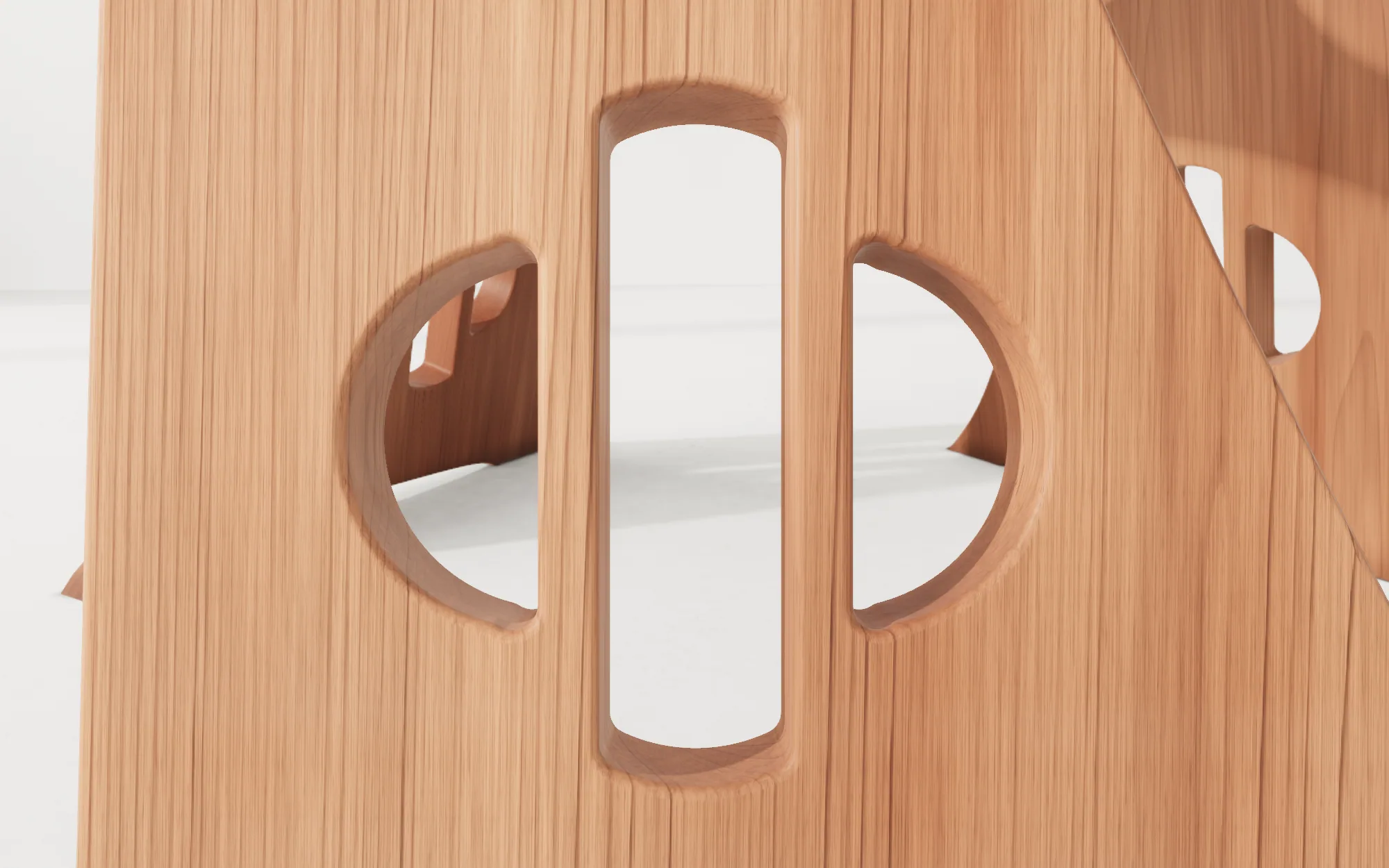
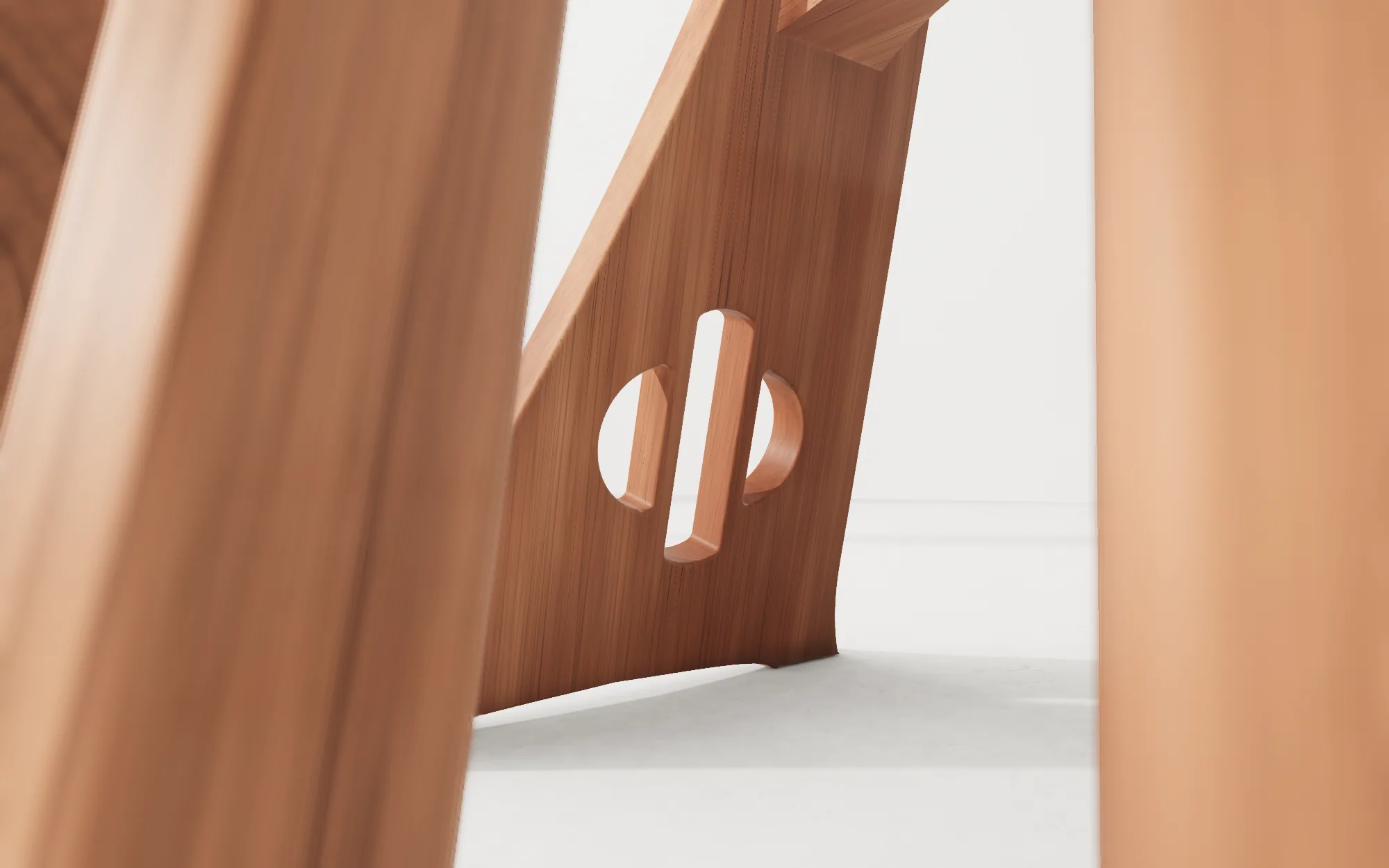
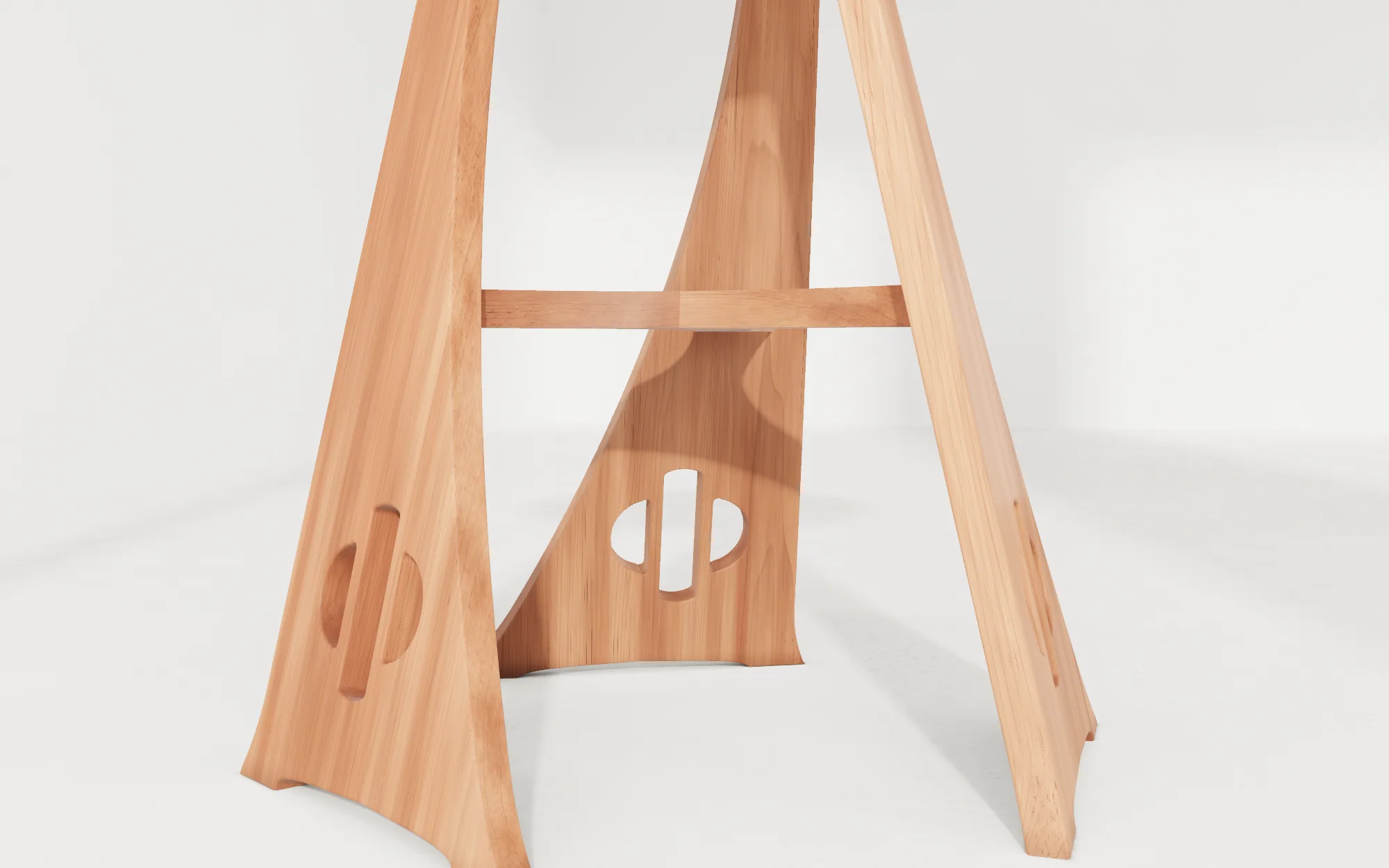
Brace at 9″ 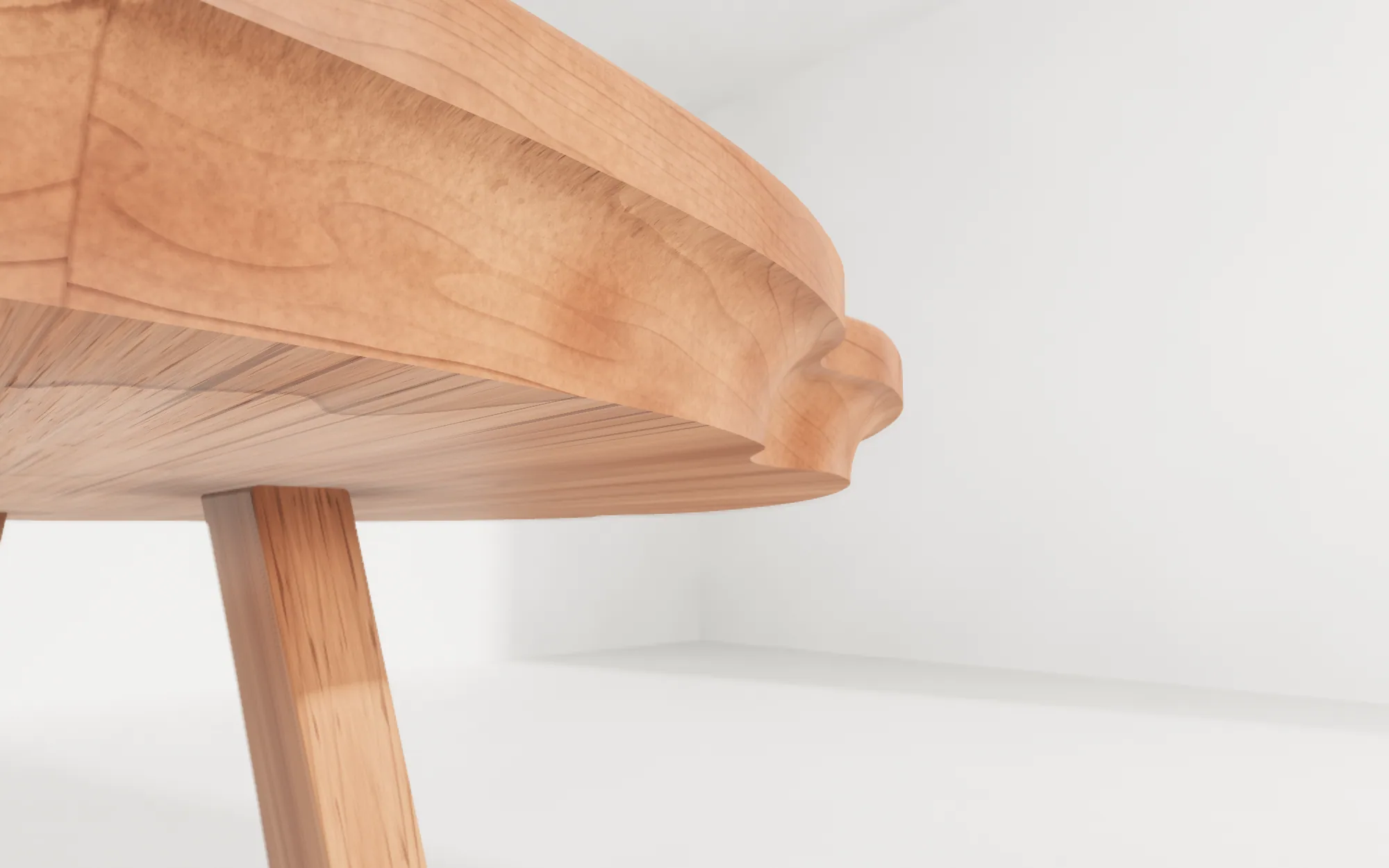
0.89″ top 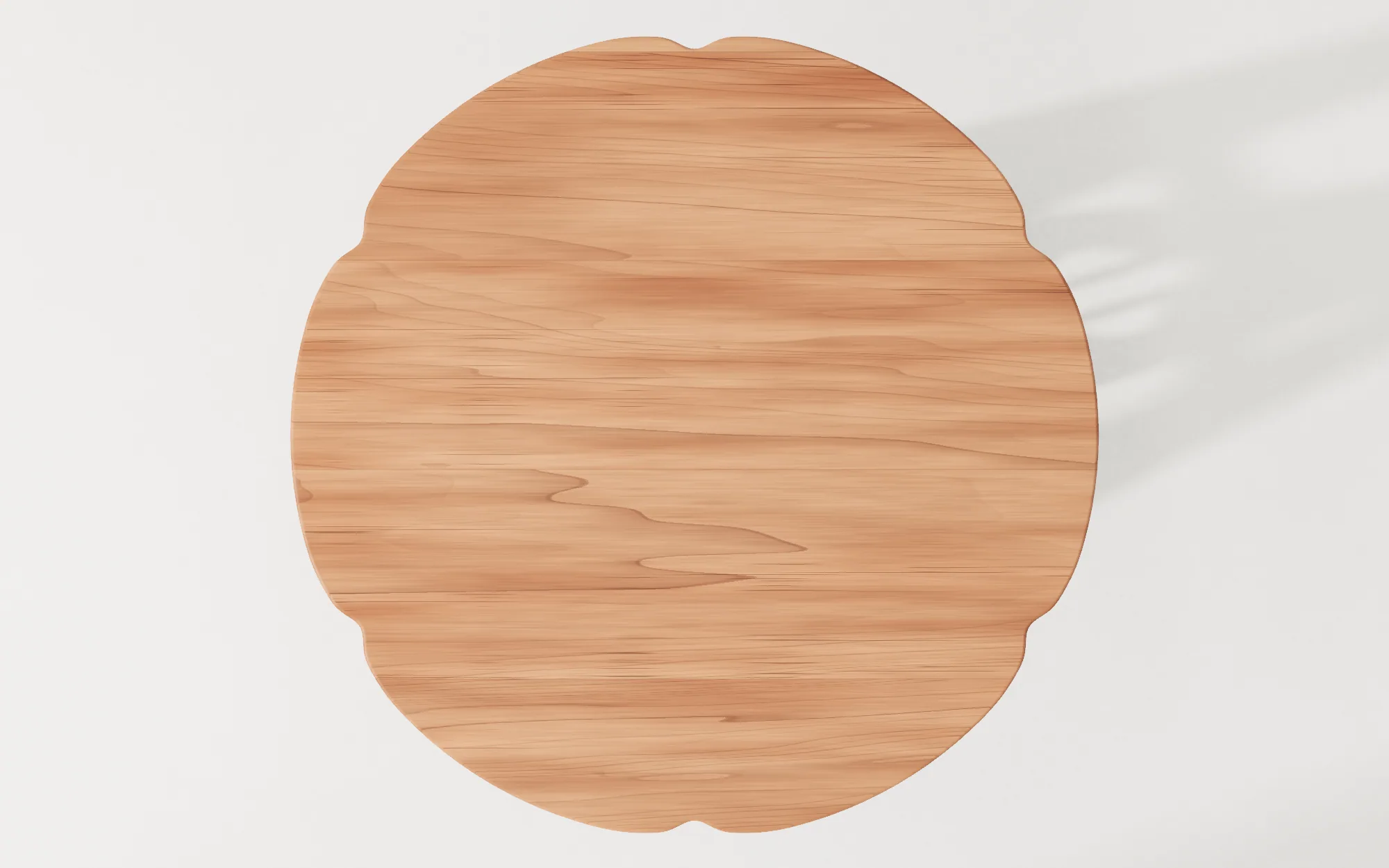
18″ across 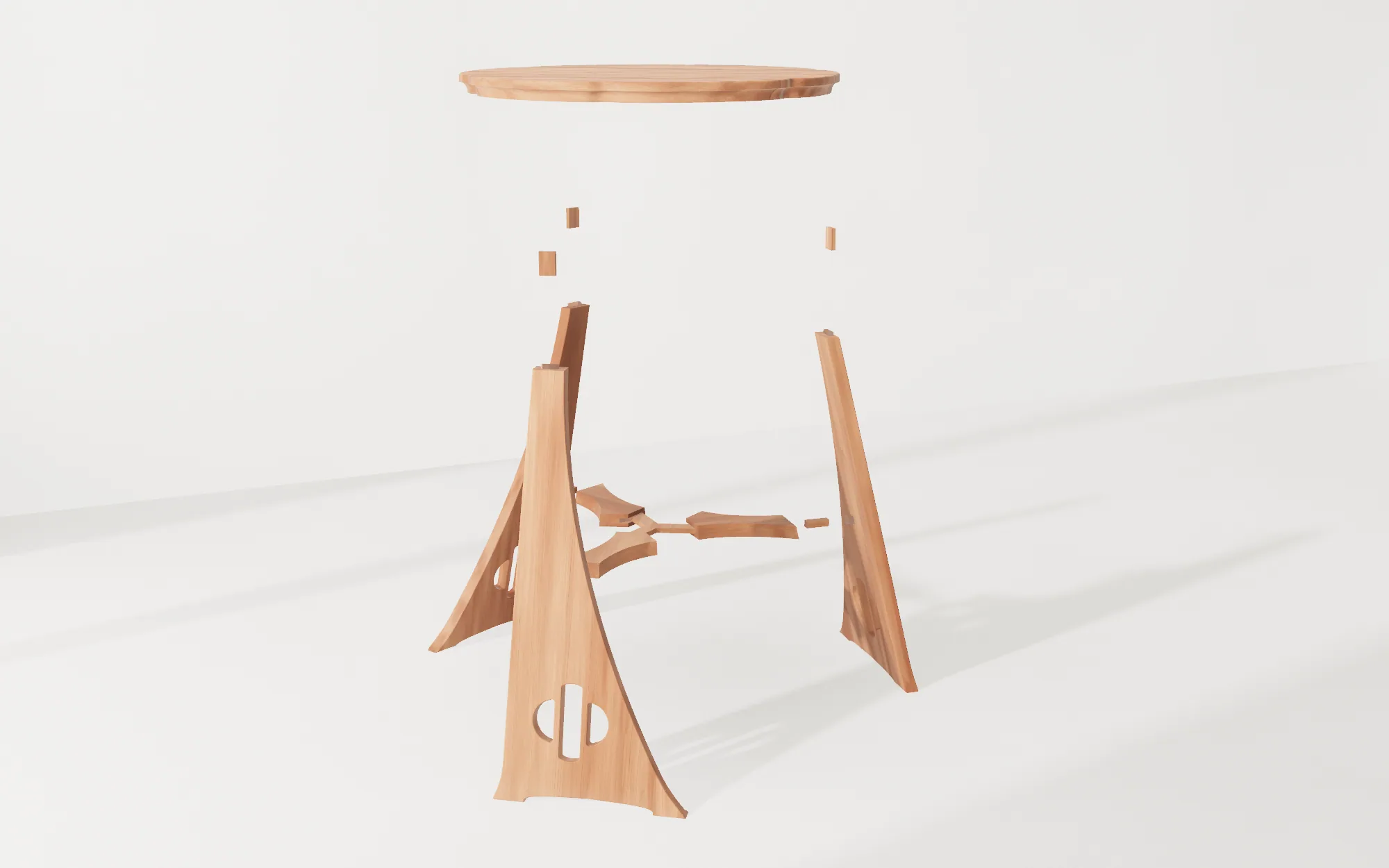
14 parts


Seven hidden tenons
Seven panels, seven loose tenons. All joints blind.


14 parts

No joint in sight.
Three kinds of tenon.
Each is a loose piece in a blind mortise.

- 3Leg to top
- ≈0.75 × 1.07 × 0.22″
- 3Brace to leg
- ≈1.23 × 0.38 × 0.36″
- 1Y at the hub
- ≈0.27″ thick
Sizes from the CAD model.
The load, made visible.
A ram presses on the middle of the top. Colour marks where the cherry is working, as a photoelastic coating would show it. The load runs down the straight edge of each leg and gathers at the brace and beside the windows.
Simulated on the CAD model as one even material standing on a smooth floor. It shows where stress gathers, not a rated load.

A cup within reach.


Process


Fourteen parts. One angle.American cherry


Avian Habitat
Next project, 5 of 5